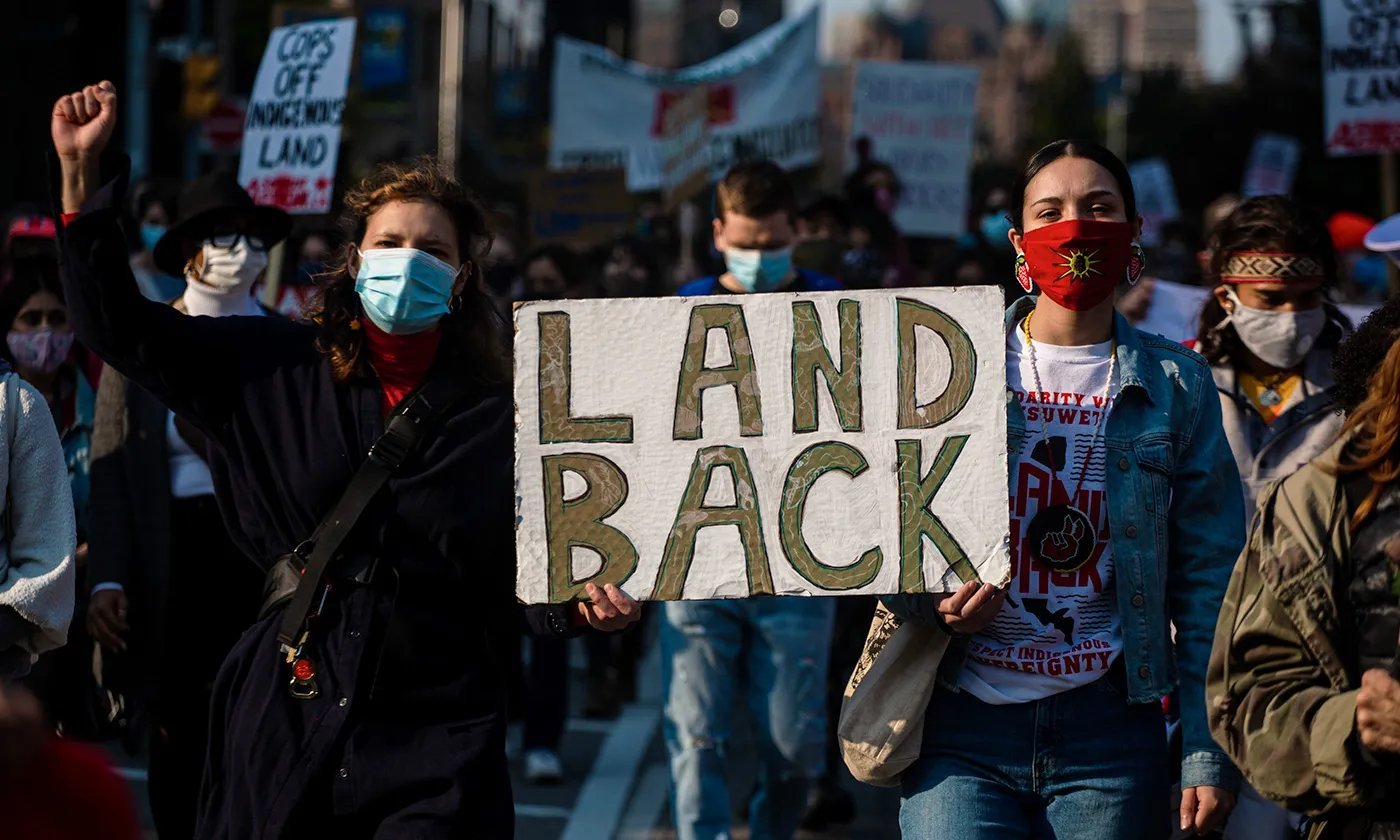
Future
Looking Forward:
Looking Forward:
Decolonization and Next Steps
We've got a long way to go. But honestly, things are starting to look more hopeful.
We've got a long way to go. But honestly, things are starting to look more hopeful.
Getting 'O Rew back to the Yurok Tribe in 2024 was a big deal. But here's the thing: land return isn't a one-and-done deal. It's not like you flip a switch and everything's fixed. It's more like a long-term project that will take generations to fully work out.
Here's why this matters:
Now, that doesn't mean progress is impossible or that individual wins don't count. The 'O Rew deal shows change can happen. But it does mean we need to think of LandBack as a marathon, not a sprint.
Eve Tuck and K. Wayne Yang argue that decolonization should not be treated as a metaphor. In other words, decolonization cannot only mean diversity, inclusion, awareness, or feeling sorry about colonial history. For Native communities, decolonization is directly connected to land because settler colonialism was built through the taking of Indigenous land.
Their point was that "decolonization" was never really about just changing people's attitudes or adding more diversity to existing institutions. It's about something much more concrete: giving land back to Indigenous peoples and taking apart colonial power structures. When we water down "decolonization" to mean stuff like reading about Indigenous cultures or saying sorry for history, we're kind of replacing the hard work with something way easier.
Their main argument boils down to this: decolonization requires land return. Not just as some abstract idea, but as something you actually do. If you're supporting systems that keep land in non-Indigenous hands, you can't really claim to be doing decolonization work.
"Decolonization isn't some feel-good exercise for us. Decolonization is what we do when we realize this land was never ours in the first place, and we actually do something about it."
Adapted from Tuck and Yang, "Decolonization is Not a Metaphor" (2012)
This connects directly to #LandBack because the movement demands material change. It argues that true decolonization must include land return, protection of sacred sites, respect for tribal sovereignty, and Indigenous control over resources. If land is not part of the conversation, then decolonization becomes symbolic instead of real.
#LandBack is not just about awareness or acknowledging history. It is about making real changes to who controls land and resources today. This is what makes it a decolonial movement in the truest sense.
Getting 'O Rew back to the Yurok Tribe is a real, tangible example of decolonization happening. But we can't treat it like the end of the story. For the Yurok people, this is just one step on a much longer journey.
Here's what still needs to happen:
Every land return, whether it's for the Yurok, the Amah Mutsun, or any other tribe, is a win. But it also shows us how much is left to do. The real goal isn't just one successful transfer. It's fundamentally changing who gets to control the land.
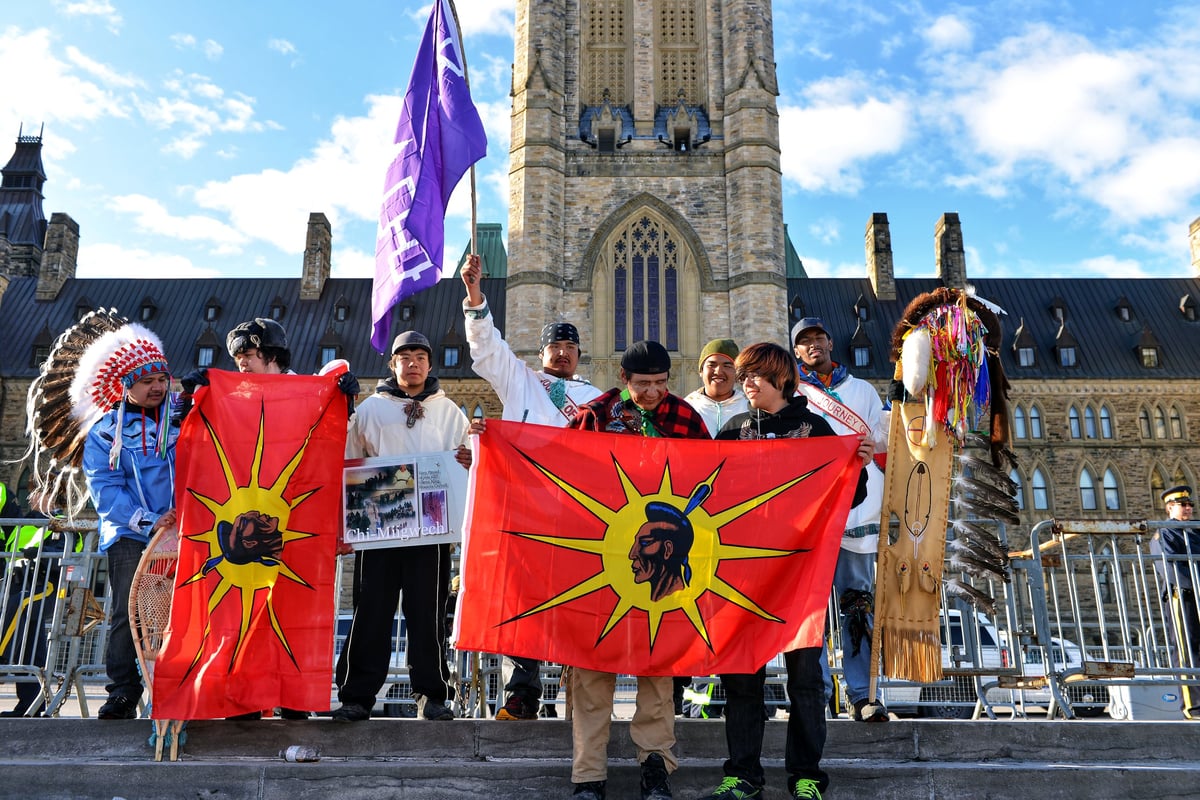
LandBack isn't a one-time thing, it's a movement that keeps going
Tuck and Yang's "Decolonization Is Not a Metaphor" supports this page because they argue that decolonization must involve land and material change. I use their argument to explain why #LandBack cannot be reduced to symbolism, awareness, or general support for diversity.
You might be thinking: I'm just a student. I don't own any land. I'm not in politics. What can I actually do to help?
Honestly? More than you'd think. Decolonization doesn't just happen in government buildings or at treaty negotiations. It happens in conversations, in the choices we make every day, and in how we choose to understand history.
Start by figuring out whose land you actually live on. Learn about your local Indigenous communities and their history. Read books by Indigenous authors. And actually listen to what Indigenous people have to say.
Share Indigenous voices instead of talking over them. Back Indigenous-led organizations. Follow Indigenous activists and journalists on social media.
Think about your own ideas around land, ownership, and sovereignty. Notice how colonial thinking shows up in your own life and choices. Sit with what it actually means to be a guest on this land.
Back policies and politicians that support Indigenous rights. Donate to Indigenous land trusts and organizations. When campaigns for land return pop up in your area, get involved.
One more thing: this isn't about feeling good about yourself. It's about making real changes. Every little thing you do adds up to the bigger picture of taking apart settler colonial systems.
The following sources support my analysis of the #LandBack movement, Indigenous activism, settler colonialism, and decolonization. I use one AIS course reading and two additional scholarly sources to connect the movement to course themes such as sovereignty, land dispossession, resistance, resource control, and anti-colonial justice.
WarJack, LaNada. "Native Americans and the Third World Strike at UC Berkeley." Ethnic Studies Review, vol. 42, no. 2, 2019, pp. 1-14.
Wolfe, Patrick. "Settler Colonialism and the Elimination of the Native." Journal of Genocide Research, vol. 8, no. 4, 2006, pp. 387-409.
Tuck, Eve, and K. Wayne Yang. "Decolonization Is Not a Metaphor." Decolonization: Indigeneity, Education & Society, vol. 1, no. 1, 2012, pp. 1-40.
LaNada WarJack's article is used as my AIS course reading for this project. Her work helps explain Indigenous activism, resistance, and Native agency.
Patrick Wolfe's article is used as one of my scholarly sources. His work explains settler colonialism as an ongoing structure. This supports my History & Theory page and helps explain why #LandBack responds to both past and present systems of land control.
Tuck and Yang's article is used as one of my scholarly sources. Their work explains why decolonization cannot only be symbolic. This supports my Future / Next Steps page by showing why land return is central to decolonization.
These sources were used for general background information, visual context, and examples connected to the #LandBack movement. They are not my three main academic sources.
AIS 10 (04) - Ryan Osier | Fresno State