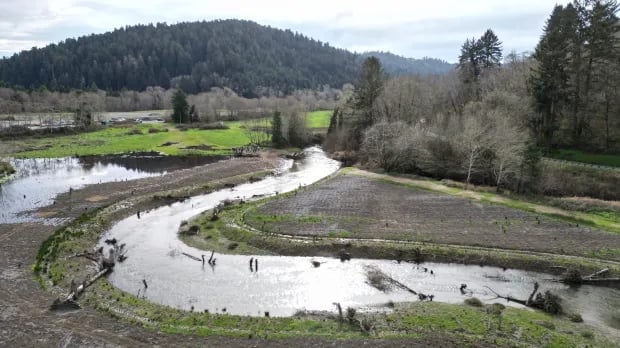
How a 2024 land agreement restored sacred territory to Indigenous stewardship.
The Yurok Tribe is one of the largest federally recognized tribes in California, with members living along the lower Klamath River in Del Norte and Humboldt counties. For thousands of years, the Yurok people have maintained an unbroken connection to their ancestral lands and the Klamath River. This relationship forms the foundation of Yurok culture, spirituality, and identity.
'O Rew (also spelled O'rew or Blue Creek) is a critical stretch of riparian habitat along the lower Klamath River. The name "Blue Creek" in English refers to the creek's clear, blue waters. This is a stark contrast to the murky main stem of the Klamath. For the Yurok people, 'O Rew is not just a piece of land. It is a sacred place where ceremonies have been conducted for generations, where traditional foods are gathered, and where the health of the river and its salmon are intimately connected to the health of the community.
Historically, the Yurok had full access to these lands. But during the reservation period, Yurok people were confined to a small portion of their ancestral territory. This land lacked access to traditional fishing grounds and sacred sites. 'O Rew fell outside the reservation boundaries, leaving the Yurok people unable to exercise their sovereignty over this culturally significant place.
LaNada WarJack's "Native Americans and the Third World Strike at UC Berkeley" helps connect #LandBack to a longer history of Indigenous activism and resistance. Her writing shows that Native communities have not passively accepted colonial systems. Indigenous people have organized, protested, occupied spaces, and fought for education, representation, sovereignty, and self-determination.
The Yurok Tribe's work to reclaim 'O Rew fits into this longer tradition of Indigenous resistance. The tribe did not simply wait for land to be returned. They organized, advocated, negotiated, and pushed for change through multiple channels. This is what Indigenous activism looks like in action.
One of the most important parts of #LandBack is Native agency. The movement does not present Indigenous communities only as victims of colonization. Instead, it shows Native people as leaders, organizers, knowledge keepers, and political actors who are actively shaping their own futures.
The return of 'O Rew was not a gift given to passive recipients. It was the result of sustained effort by Yurok leaders, tribal staff, attorneys, and community members who organized for years. This is Native agency in action.
In 2024, a landmark agreement was reached that would return over 1,400 acres of ancestral Yurok territory. This includes the sacred 'O Rew tract and transfers it to tribal ownership. The agreement involved a partnership between the Yurok Tribe, the Save the Redwoods League, and the RL Johnson Land Trust.
The Save the Redwoods League, an organization with over a century of history protecting California's redwood forests, had acquired the property decades earlier with the intention of eventually returning it to Indigenous stewardship. This agreement fulfilled that commitment.
The RL Johnson Land Trust played a crucial role in facilitating the transfer, providing the financial mechanisms that made the deal possible. Without these partnerships, the Yurok Tribe would have faced significant financial barriers to reacquiring their ancestral territory, despite having the legal claim and cultural connection to the land.
The agreement was not merely a land transfer. It represented a new model for conservation. This model recognizes Indigenous peoples as essential partners in protecting and stewarding the land, rather than as obstacles to be worked around.
The return of 'O Rew represents a shift toward Indigenous-led conservation
The return of 'O Rew was not simply a symbolic gesture. It came with concrete commitments to restore the land to its natural state. The Yurok Tribe and their partners outlined an ambitious restoration plan that addresses decades of environmental degradation.
Restoring native vegetation along streambanks to stabilize soil, filter water, and provide habitat for wildlife.
Creating healthier conditions for Chinook salmon and steelhead trout that spawn in the Klamath River.
Removing asphalt and other impervious surfaces that had degraded the natural landscape.
Establishing Yurok-led management practices that will protect the land for future generations.
The Klamath River once supported one of the largest salmon runs on the West Coast. Decades of habitat degradation affected salmon populations. This included water diversions, dams, and agricultural runoff. The restoration of 'O Rew helps reverse this damage by reconnecting floodplains, providing shade to cool water temperatures, and creating the conditions salmon need to thrive.
For the Yurok Tribe, the return of 'O Rew is fundamentally about sovereignty. Tribal Chairman Joseph L. James described the agreement as "a historic step toward reclaiming our ancestral lands and restoring our ability to care for our people the way our ancestors did for thousands of years."
Sovereignty is not just a legal concept. It is the ability to make decisions about your own land, your own resources, and your own future. With ownership of 'O Rew, the Yurok Tribe can once again exercise the self-determination that was denied to them during the reservation period.
The 'O Rew agreement represents a shift in how conservation is understood. Too often, environmental protection has excluded Indigenous peoples from their ancestral lands in the name of "preservation." The Yurok model demonstrates a better approach: placing land back in Indigenous hands, where it can be managed according to traditional ecological knowledge accumulated over millennia.
Yurok land management practices are not relics of the past. They are dynamic, evolving systems that integrate traditional knowledge with contemporary science. The tribe's stewardship of 'O Rew will benefit not only the Yurok community but the broader ecosystem and all who depend on the Klamath River.
The return of 'O Rew is not an isolated event. Across the country, similar agreements are returning land to tribal nations. The Yurok case demonstrates what is possible when conservation organizations, government agencies, and Indigenous communities work in partnership rather than at odds.
It also demonstrates that LandBack is not just a slogan. It is happening through tribal land purchases, federal land transfers, conservation easements, and legal settlements. Each success creates momentum for the next.
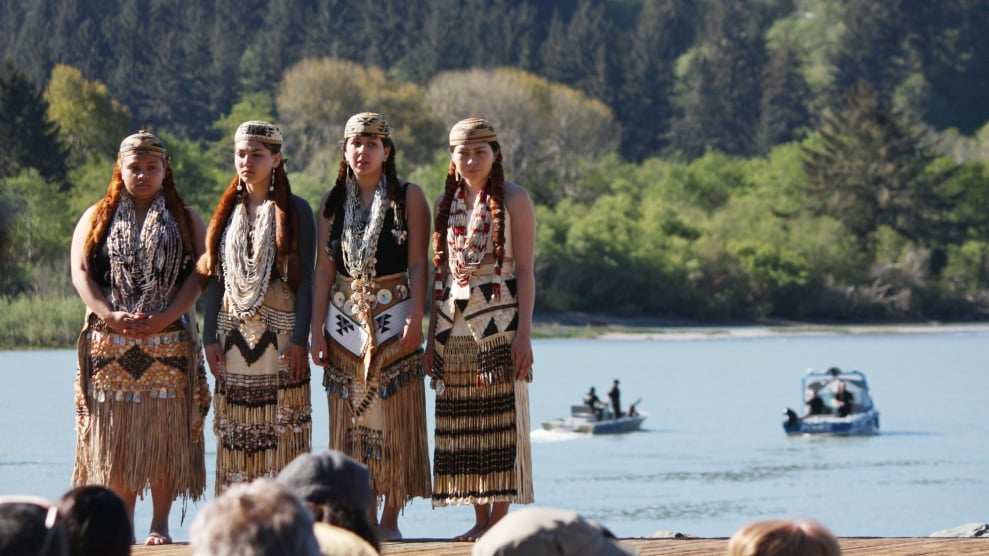
LaNada WarJack's article supports this page because it highlights Indigenous activism, resistance, and self-determination. I use WarJack's work to connect #LandBack to a longer history of Native organizing and political action.
The 'O Rew agreement proves that returning stolen land is legally, financially, and practically achievable.
Protecting the environment and returning land to Indigenous peoples are complementary goals, not competing interests.
True tribal sovereignty requires control over ancestral lands. Not just legal recognition, but practical ability to steward the territory.
LandBack is not a future aspiration. It is a present reality, with tangible results for communities and ecosystems alike.
Learn more about the broader context and significance of movements like the return of 'O Rew.
AIS 10 (04) - Ryan Osier | Fresno State